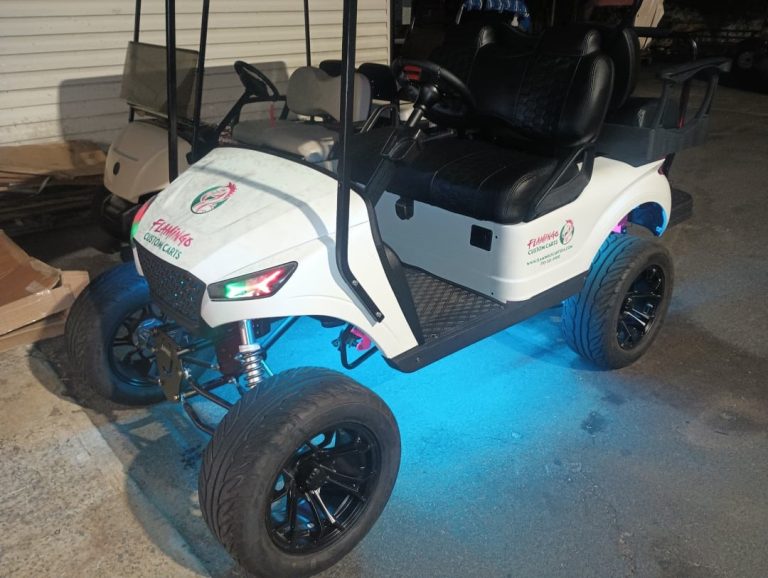




Proper golf cart storage comes down to a clean, dry, ventilated spot, fully inflated tires, wheels chocked instead of the parking brake set, and a power source that is protected for the months ahead. For an electric cart that means fully charged batteries that you recharge at least every 30 days; for a gas cart it means stabilized fuel and a cared-for engine and starting battery.
This guide walks through eight off-season steps based on E-Z-GO’s owner’s manuals for its TXT 48V electric and TXT gas carts, along with Trojan Battery’s guidance on storing lead-acid batteries. Your own cart’s manual is the final word, so check it for model-specific steps.
Why Golf Cart Storage Prep Matters
A cart that sits for months without preparation can come back with drained or damaged batteries, flat-spotted tires, stale fuel and stuck brakes. E-Z-GO’s gas manual explains that storing a cart for 30 days or more requires preparation to prevent varnish and gum from building up in the fuel system.
Electric carts have their own risk. Trojan’s battery FAQ notes that storing a lead-acid battery in a discharged state leads to sulfation, which reduces performance and can shorten battery life. A little work before golf cart storage saves a lot of work, and expense, in spring.
8 Helpful Golf Cart Storage Steps
Steps 1 through 4 apply to every cart. Steps 5 and 6 are for electric carts, and steps 7 and 8 are for gas carts.
Set aside an hour or two for golf cart storage prep before the weather turns, and gather what you need first: wheel chocks, a tire gauge, baking soda, a soft brush, distilled water for flooded batteries, safety glasses and gloves, a cart cover, and fuel stabilizer for a gas cart.
1. Choose a Clean, Dry, Ventilated Spot
E-Z-GO’s gas manual calls for a clean, dry, well-ventilated area for storage, away from stoves, furnaces, water heaters or any appliance with a pilot light or spark. That advice makes sense for electric carts too, since charging batteries release hydrogen gas.
The right spot is the foundation of golf cart storage. A garage, shed or covered storage unit works well. If the cart must stay outdoors, park it on firm ground out of standing water.
2. Clean the Cart Before It Sits
Dirt, grass clippings and moisture left on the cart all winter can encourage corrosion. Wash and dry the body, seats and floor, and clear debris from around the wheels and under the seat.
On electric carts, clean the battery tops and terminals too. E-Z-GO’s manual recommends a baking soda and water solution and a low-pressure rinse, and warns against using a pressure washer on batteries.
3. Inflate the Tires
E-Z-GO’s gas manual says to fully inflate the tires before storage, referring to the tire pressure listed in the manual. Use the pressure your owner’s manual specifies, and never exceed the maximum printed on the tire sidewall.
Check pressure again when you bring the cart out of storage, since tires lose air over time.
4. Chock the Wheels and Leave the Parking Brake Off
This golf cart storage step surprises many owners. For long-term storage, E-Z-GO’s gas manual says to turn the key off, put the direction selector in neutral, chock the wheels so the cart cannot roll, and not set the parking brake. Check your own manual for your model’s guidance before you leave the brake off.
Remove the key and keep it somewhere you will remember in spring.

5. Electric Carts: Charge Fully and Set the Run/Tow Switch to Tow
For winter storage, the E-Z-GO TXT 48V owner’s manual says batteries must be clean, fully charged and disconnected from any source of electrical drain. It recommends disconnecting the charger and other electronic devices that can slowly drain the pack.
On carts with a Run/Tow switch, set it to Tow/Maintenance/Storage. E-Z-GO notes that leaving the switch in Run for an extended period will drain the batteries.
On flooded lead-acid batteries, check the water level after that final charge and top off with distilled water as needed.
6. Electric Carts: Recharge at Least Every 30 Days
Batteries discharge on their own while they sit. E-Z-GO’s manual says the batteries must be checked and recharged as required, or at a minimum of 30-day intervals, and that fluid levels in every cell should be maintained during storage.
Trojan adds two important points: never store batteries in a discharged state, and keep them in a cool, dry place. A full charge also guards against cold, because Trojan notes a battery can only freeze when it is partially or completely discharged. Put a monthly reminder on your phone so winter storage does not turn into a dead pack.
7. Gas Carts: Stabilize the Fuel and Protect the Engine
Fuel is the main concern for a gas cart in storage. The E-Z-GO TXT gas owner’s manual lists these steps for its engine:
- Add fuel stabilizer to the fuel; E-Z-GO specifies 4 oz. for a full tank on that model, and the cap should be installed securely.
- Remove the spark plug, pour about 1/2 oz. (15 ml) of SAE 5W-30 or fogging oil into the cylinder, turn the crankshaft by hand several times, and reinstall the plug.
- The old oil may stay in the engine during storage, but change it before returning the cart to service.
Engines differ, so use the amounts and products in your own manual. Handle fuel only in a ventilated area away from flames or sparks.
8. Gas Carts: Care for the Starting Battery and Cover the Cart
Gas carts still have a battery. If the cart will be out of service for three months or longer, E-Z-GO’s gas manual says to remove the battery, make sure it is fully charged, store it out of the sun in a cool, dry place, and check its voltage each month, recharging as needed.
Finally, cover the cart. E-Z-GO recommends a vehicle-specific cover because it allows ventilation that helps prevent condensation and corrosion. That advice applies to electric carts as well.
Taking Your Cart Out of Golf Cart Storage
When the off-season ends, work back through the list before the first drive:
- Gas carts: change the oil, check that the spark plug is tight and complete the pre-ride inspection in your manual.
- Electric carts: charge fully, check water levels after charging, and set the Run/Tow switch back to Run.
- All carts: remove the chocks, check tire pressure, and test the brakes and parking brake at low speed.
- Look over cables, lights and the horn before you head out.
E-Z-GO’s electric manual adds that after connecting a battery or any other wiring, you should wait at least 30 seconds before moving the Run/Tow switch to Run. If the cart still does not respond, our guide on what to do when a golf cart won’t move walks through the next checks.

Frequently Asked Questions
Can I leave my golf cart plugged in all winter?
Follow your cart and charger manuals. E-Z-GO’s TXT 48V manual recommends disconnecting the charger and other drains during storage and checking or recharging the batteries at least every 30 days.
Should I set the parking brake during golf cart storage?
E-Z-GO’s gas manual says not to set the parking brake during storage and to chock the wheels instead. Check your own manual for your model.
Do I need fuel stabilizer for a gas golf cart?
E-Z-GO’s gas manual calls for fuel stabilizer when storing a cart for 30 days or more, to prevent varnish and gum from building up in the fuel system.
Can golf cart batteries freeze in winter?
A fully charged lead-acid battery strongly resists freezing. Trojan notes that a battery can only freeze when it is partially or completely discharged, which is why regular recharging during storage matters.
Get Your Cart Ready for Storage or Spring
Golf Carts Atlanta has serviced golf carts in metro Atlanta since 1995, including batteries, chargers, brakes and electrical systems. If you would like help with golf cart storage prep or a spring check-up, see our service and repair page, call (770) 321-9300 Monday through Friday, 7am to 3pm, or contact us online. We are at 1680 Lower Roswell Rd, Marietta, GA 30068.